

Grabbing Nicolás Maduro was less of a departure from US norms than many people want to admit. And yet it’s the clearest indication yet that Donald Trump is willing to use physical force to achieve his goals – and those goals really are a break with post-war history. That combination is enough to necessitate dramatic changes to Europe’s security posture.
There can no longer be any illusion that America First means isolationism, or that Trump abhors conflict and just wants to make deals. Under that scenario, America might abandon Europe but would never menace us directly. As the threat to Greenland makes clear, that is no longer guaranteed.
The US has routinely ignored the rules it sought to enforce on others, veiling its unilateralism in the privileged vocabulary of ‘intervention’. Last weekend, it used military force to capture a dictator on his own territory, install pliant new leaders and dictate policy to them, all without a UN resolution. That’s normal: It did the same in Iraq in 2003, only much less cleanly.
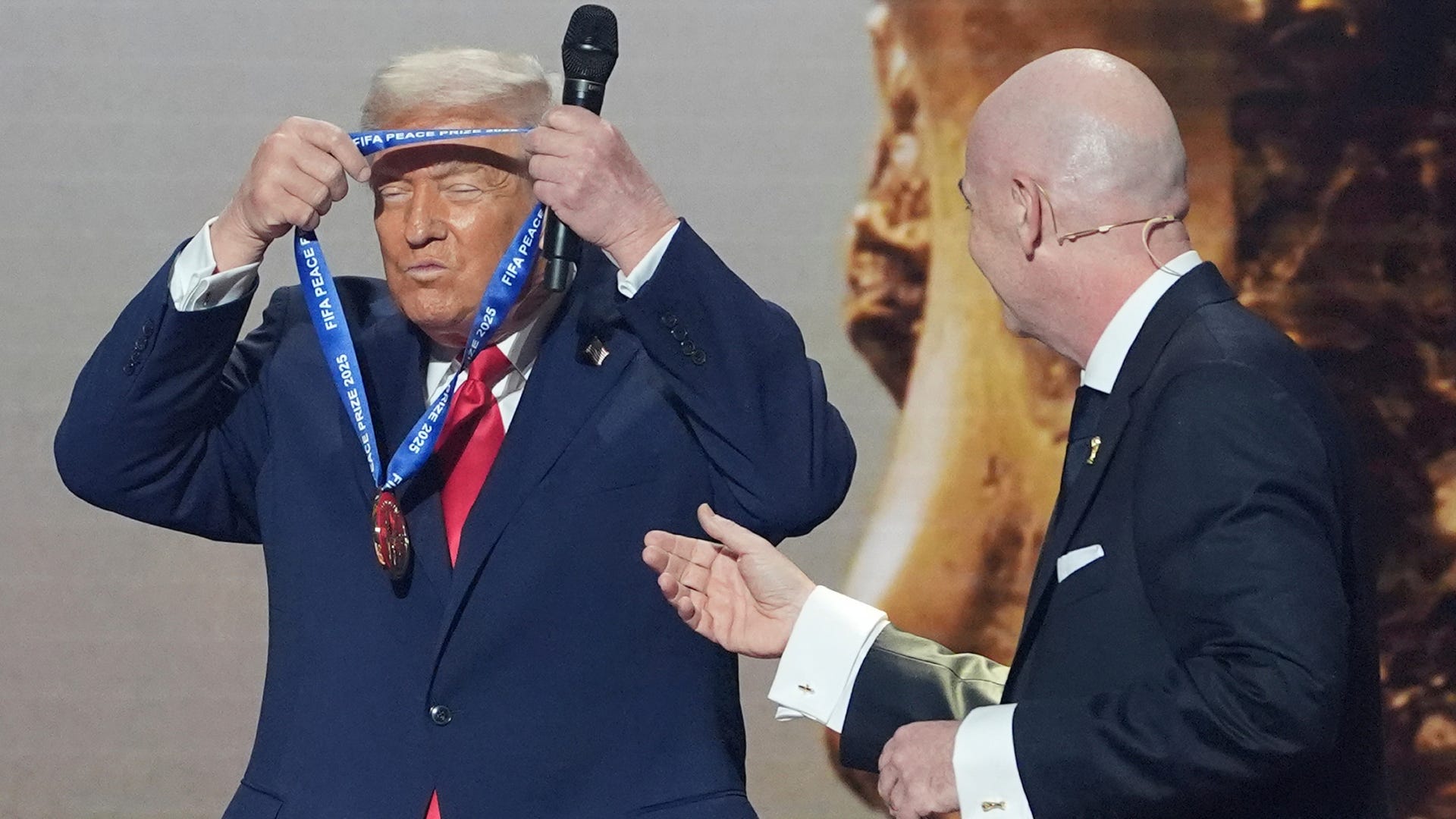
Or consider Barack Obama, the liberal darling who carried out more than 500 drone strikes in countries that were not at war with the US, an action that has no basis in international law. The Nobel Peace Prize winner who assassinates America’s enemies is not so different to the FIFA Peace Prize winner who kidnaps them.
Two things have changed, however. First, the Trump administration is the first in the post-war period not to view European countries as allies, as shown by last month’s National Security Strategy. Second, Trump appears to be acting outside the checks and balances of the US state as well as international law: The strike on Venezuela came without authorisation from Congress and with no pretence of noble intent, unlike Iraq and other wars. That increases the risk of Trump doing something radical like attacking a NATO ally.
Neither foe nor friend
There’s a growing sense in the political mainstream that the strategic outlook has shifted. Rory Stewart, a former British diplomat and now co-host of the centrist Rest is Politics podcast, referred to the US this week as a “threat” to European democracies alongside Russia and China.
Trump has made explicit and repeated threats to annex Greenland from Denmark. If he decides to do so, there is nothing Denmark or the EU could do about it. The US has escalation dominance at every rung of the ladder; Europe’s dependence on the US financial system and tech firms make even sanctions unthinkable.
The threat to Greenland has led sober commentators such as Phillips O’Brien to suggest that “the US is more likely to fight Europe than to fight for it”. The FT’s Edward Luce says “Greenland could be next”. In that case the US should perhaps be considered as more of a threat than China, which practices economic coercion worldwide but threatens military force only within its immediate sphere of influence.
A less pessimistic reading is that the US would stop at Greenland, which is both in the Western hemisphere and strategically important for monitoring Russian activity in the Arctic as polar ice-caps melt. These factors offer a justification of US interest that could not realistically be replicated against mainland Europe.
But even if the prospect of direct military confrontation remains limited, European dependency on the US creates an unacceptable vulnerability to coercion. It’s not impossible to imagine an aircraft carrier loitering off a European coastline after a far-right party loses an election and cries foul, for example. And if it came to scrambling our US-made fighter jets, are we confident that we could turn them on?
None of this means we should see the US as an enemy, but the argument that it’s a friend is getting harder to sustain. As Stewart said, Europe should no longer make the mistake of “assuming they’re going to be – under Trump or indeed under one of Trump’s successors – a stable, reliable, values-based ally”.
Strategic autonomy from each other
Decoupling from the US will require European armed forces to work closely with each other – and that will require cultural change. All of Europe’s former great powers still feel the need to have their core equipment made not only in Europe but in their specific country, leading to fragmentation, inefficiency, and dependence on the US for more advanced kit.
When I trained as a young man with the British reserves, there was a pervasive sense even at the junior officer level that it would somehow be inappropriate to rely on French or German equipment. Officers’ messes were adorned with paintings of historical battles against those former enemies, with the subtext that we would dishonour our ancestors by aligning too closely with them.
That attitude must change. No European country spends nearly enough on defence to produce all its own equipment at scale, and when we inevitably fall short we end up turning to America. In shunning old rivals, we make ourselves vulnerable to a new one.
By way of example, the UK has spent more than £5 billion developing Ajax, an infantry fighting vehicle. From the early stages of testing, extreme noise and vibration in the cabin made soldiers severely ill; more than a decade in, these problems persist and there is no set date for its entry into service. All of this for a UK order of less than 600 vehicles (foreign buyers seem unlikely, given the above), which translates to almost £10 million per unit.
Meanwhile Germany makes the Puma, a vehicle with similar specifications that has been in service since 2015 and is, by all accounts, excellent. The UK could simply have bought the Puma rather than spend a decade developing a worse alternative. The obstacles to such a thought process were primarily cultural; if jobs were the concern, the £5 billion would have been better invested in developing a unique product that might find overseas buyers.
European countries are small, these days; none of us can face the century alone. To break free from America, our armed forces must learn instead to depend on each other.
This essay first appeared on The Sentinel, my new publication focused on European defence and rearmament. I’ll occasionally cross-post pieces of interest to this broader audience, but if you’re interested in defence please consider subscribing here.
"If it came to scrambling our US-made fighter jets, are we confident that we could turn them on?" Well that's a terrifying thought!